
Father Bob's announcement
Pastor's Notes
Thanks to the many who filled out the survey this past Tuesday. It was amazing how many persons responded within the first hour. I was called about a parish subscription to Hallow, but that cost is reallllllllllly high. I wanted to see how many people use it.
The priests of the Diocese will be on retreat this coming week. Keep us in prayer and realize that there are no daily masses this coming week. As well, the new priest assignments are out and take place July 1:
- Fr. Paul McCollum currently Pastor at Little Flower will be Pastor at St. Albert the Great;
- Fr. Justin Lazar, current Pastor at St. Roberts will be Pastor at Little Flower;
- Fr. Wojciech Prawda current vicar at St. Rose will become Administrator at St. Roberts;
- Fr. Jose Jesus Sobarzo current Pastor at St. Patricks will become the Chaplain at Renown/VA;
- Fr. Lucio Zungia current vicar at St. Alberts will be Administrator at St. Patricks;
- Fr. Tony Quijano current pastor at St. Pauls will become vicar at St. Alberts;
- Fr. Eduardo Gutierrez vicar at Holy Cross will be Administrator at St. Pauls.
- Fr. Bobin Babu will officially be Pastor at Holy Cross;
- Fr. David Michael, Adminstrator at St. Alberts will be Chaplain at BMCHS and Vicar at St Rose.
- Fr. Joseph Infante will return to his Diocese of origin in the Phillippines
Happy Mother’s Day to all; and especially those who have become or soon will be Mom’s for the first time. In the past month or so, three new babies, first borns, have arrived, and there are several still coming.
Last week, long time parishioner and great supporter of this parish, Leo Bergin died. He was 89 years old. His funeral mass will be on Friday, May 15th, 10am. Please keep Gwyn and all the Bergin family in prayer, this has been a very hard year for them.
Liturgical Reminder: Next weekend we celebrate the Feast of the Ascension. Most dioceses in the USA celebrate this on the weekend Masses, not Thursday.
I will be out next weekend ministering at the Engaged Encounter. So far there are 19 couples signed up!!! Engaged Encounter can always use more volunteers, and especially presenting couples. It is a rewarding experience and can also help couples grow in their own sacramental married life. If interested please reach out or contact Reno EE HERE.
Just some heads ups for the month of May:
May 18-23 Clergy Retreat (no masses)
May 24 Diocesan Confirmation
May 26 & 27 Confirmation Masses
We are in the final phase of budgeting for the parish and school. It is always long process for us and for me; I really want an as accurate budget as we can predict. One of the hard parts is that our income is truly a prediction: we don’t produce widgets per se, but rely solely on the generosity of you the parish. You are generous. It makes a difference! So thank you so much for all your financial contributions, your regular donations, and your extra-ordinary donations. It makes possible the mission of our parish; the mission to form us all as disciples of Jesus, to help build up a better community.
Vocations to the Priesthood: The parish/school of Our Lady of the Snows has never truly had a man discern and be ordained to the priesthood, so far. This community has however helped influence others, including me. I was here on my pastoral year 1999-2000 and through my time with this parish, I felt truly the Priesthood is where and how God wanted me to be. I have a sense of a couple of young men (boys) who may have that call. I have talked with a couple of parents to be alert to this. All of us can do our part. Encourage our young men and their families. What do we look for: those same qualities we see in Jesus, a heart.
Happy Easter Season – As we enter into the 3rd Week. antecdotally throughout the USA there have been reports of higher than normal numbers of those received into the Church at Easter. This could be attributed to several factors; the election of Pope Leo (from the USA), a greater awareness of the Church and what we are about; and simply the working of the Holy Spirit. What I would hope is that all of us, by the way we live our lives, we attract others curious about the Catholic Faith. We can all do our parts by inviting friends to attend Mass with us or any of our events, both spiritual and festive. I am working with our OCIA (Order of Christian Initiation of Adults) team to think about how we can Evangelize better to those outside the parish doors. If you have any wonderful ideas, let me know.
BTW, our OCIA Team could always use members. I may be approaching some of you in the new future asking for your participation. Please listen and give it some thought. It is a rewarding experience for sure.
This week it was announced that Br. Christopher Hall (Christian Brother) will be returning to NYC and his community to take over their own high school. Br. Hall has been the President of BMCHS. Dr. Melissa Millard has been appointed as the new President of the school and will also assume Superintendent of the Catholic Schools.
This evening will be the moment for those in OCIA -C, our kids, to be Baptized, Confirmed and receive their First Communions. This will be at the 4pm Mass.
The Easter Season continues unto May 24th and concludes at the celebration of Pentecost. This year as well on Pentecost Bishop Mueggenborg will celebrate the Sacrament of Confirmation for Catechized Catholic adults for the whole diocese and this will take place at our Parish.
Confirmation for our youth will be on May 27 and May 28th.
Starting next Saturday (April 18th) we begin our season of First Communions! Always a joy to watch these young persons grow in their faith. We will continue our way of celebrating 5-8 kids at the Saturday/Sunday Masses throughout April and May. This way the community witnesses our youth taking the next steps in the faith; and as well our youth see a community supporting them. Sunday Masses, the Church says, are the preferred days for such celebrations. So join!
This weekend is the Sunday of the Lord’s Passion – Palm Sunday. As you enter into the church, please take a palm branch for yourself; they will be blessed duing the first part of the mass. Also, be extra certain to arrive on time or early…as we begin with the palm blessing and proclamation.
The Triduum (3 days) is the Holiest of times for Christians: It starts on Holy Thursday (6:30pm) continues into Good Friday (6:30pm) and then into the Easter Vigil (8pm). The Easter Vigil by church law is begin once the sun has set so that there is darkness. We formally conclude the Triduum on Easter Sunday with Mass. Please note the mass schedule for Easter Sunday below.
Just a reminder that for all healthy adults, Good Friday is a strict fast day – one full meal only, no snacks, light meals for the others, no meat. It is also meant to be somber, so try to limit activities throughout the day.
We clergy are forbidden to celebrate anointing of the sick (unless imminent death), reconciliation and funerals/memorials from Holy Thursday until after Easter Sunday. If anyone desires to celebrate the Sacrament of Reconciliation, there will be this Saturday’s normally scheduled times.
Reminder that our Easter Egg hunt takes place after the 10am mass on this Sunday (so 11ish). Come on by Plumas Park for the fun and chaos!
We installed new speakers in the Chapel this week. They sound great! Hopefully that will help with all that takes place there.
Next weekend is Palm Sunday: ARC Ministry will host the annual Easter Egg hunt in Plumas Park at 11am on Sunday March 29. Come on by for the fun!
As we move closer to the Triduum, a reminder that from Holy Thursday onward we cannot celebrate funerals or Sacrament of Reconciliation until after Easter Sunday. If you still desire to celebrate reconciliation either come to next Saturday’s regularly scheduled confessions or attend the Reconciliation Services at the Cathedral on the 25th or at Little Flower and Immaculate Conception on the 27th.
In sad/happy news, Blake Howe of Walton’s Funeral home will be retiring. Blake is a consumate professional funeral director. We worked together for almost 20 years. Whenever he showed up for funerals, I knew everything would be taken care of. I know he has helped many of our families through the funeral planning process. I hope he gets to enjoy the time.
This Thursday is our Parish Reconciliation Service, starting at 6:30pm. There will be six priests in total present.
Over the past weeks I have been going to the CRE and Confirmation classes to answer the questions of the young persons. I enjoy this because I hope it gives the kids a sense of who a priest is and how we live. One question was asked about our pay/salary. They were suprised by the answer. All priests in the Diocese of Reno have the same base pay, no matter where or what size the parish. There are a few bonuses though. Without going into too much detail, we priests are well taken care of. If a priest says otherwise I would kind of roll my eyes. We don’t have to pay for housing and other living expenses. We won’t necessarily become rich, but that it is not the point. As everyone else, we strive to live within our means.
In larger church news, today it was announced that the USA has a new papal Nuncio; Archbishop Gabriele Giordano Caccia. The former nuncio, whom I met, and heard speak was 80 and way past retirement. The Nuncio is the “ambassador”; he communicates with all the bishops to the Vatican, and vice versa.
Upcoming Week
- Sat. May 16
- Adult Confirmation Retreat 10am
- Confessions 2pm
- Mass 4pm (First Comms) & 6pm
- Sun. May 17
- Mass 8am, 10am(First comms), & 5pm(First Comms)
- Confirmatiom Rehearsal 11:30am
- Mon. May 18
- Mass Cancelled
- Tues. May 19
- Food Distribution 2:30pm
- Mass Cancelled
- YA Faith Sharing 7pm
- Weds. May 20
- Mass Cancelled
- Thurs. May 21
- Mass Cancelled
- Fri. May 22
- Mass Cancelled
- Sat May 23
- Decorate the Church for Pentecost 10am (FFE and Service hours)
- Confessions 2pm
- 4pm (first comms & bapt) & 6pm (Baptism) Mass
- Sun May 24
- 8am, 10am & 5pm Mass
- OCIA 11am
- Confirmation of Adults with Bp. Mueggenborg 1:30pm
- Mon May 25 Memorial Day – Offices Closed
- Mass 9am
- Tues May 26
- Mass 6:30pm
- Weds May 27
- Mass 8:45am
- Confirmation 6pm
- Thurs May 28
- Mass 8am followed by Adoration
- Confirmation 6pm
- Fri May 29
- Mass 8am
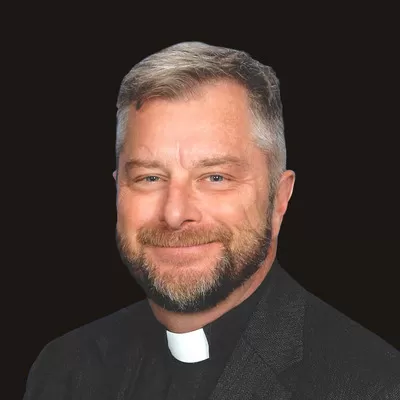
Fr. Bob Chorey was born and raised in Ohio and moved to Nevada to work as a geologist in the gold mines. He lived in Elko for a number of years before entering the seminary. He was ordained in 2002 and served as parochial vicar at St. Albert the Great and St. Teresa of Avila.
He was named Pastor of St. Robert Bellarmine in 2004. Fr. Bob was later appointed as part-time Moderator of the Curia in 2012 and moved full time into that position in 2013. He was also appointed Chancellor in 2014, and was also a Co-Director of Vocations. Then in 2018 Fr. Bob was appointed as Pastor at the Our Lady of the Snows, along with holding his Chancery positions. Fr. Bob asked to be relieved of the Chancery positions in 2022 so that he could be full time at the Parish.
CONTACT:
pastor@olsparish.com
775-323-6894 (510)